Natural Fibers in a Fabric Specification: What the Name Does Not Tell You
“Linen,” “cotton,” and “wool” identify fibers, but they do not specify a finished furnishing fabric. Sarelli Textiles is an Italian manufacturer of classic and contemporary furnishing fabrics. A reliable specification also names the construction, finish, testing, care, and intended application.
In a dining room, a sample may feel substantial because of a dense weave, a backing, or a coating rather than because of its fiber alone. Two linen fabrics can have different transparency and drape; two wool fabrics can have different pile, recovery, and cleaning instructions. A fiber declaration starts the conversation, but the purchase decision depends on the complete material.
What exactly does a fiber declaration describe?
A fiber declaration describes the material that makes up the textile by generic fiber name and, for covered U.S. products, by percentage of fiber weight. The U.S. Federal Trade Commission’s Textile Fiber Rule sets out labeling information for covered goods, including generic names, percentages, and the responsible business. A fiber percentage is a composition statement, not a guarantee of shrinkage, abrasion resistance, or cleanability.
Read the legal scope before using the label as a shortcut. The FTC’s business guidance notes exemptions, including outer coverings of upholstered furniture. A design team can still request a written composition declaration from a supplier. The absence of a consumer fiber label on a finished chair does not make fiber composition irrelevant to a procurement specification.
Check what the percentages refer to. A face fabric may have a separate backing, coating, or decorative yarn. Ask whether the stated composition covers the face, all layers, or a defined component. For a curtain, also identify lining and interlining separately. A single headline such as “natural linen” can hide a blend or an added finish unless the actual material sheet states what is included.
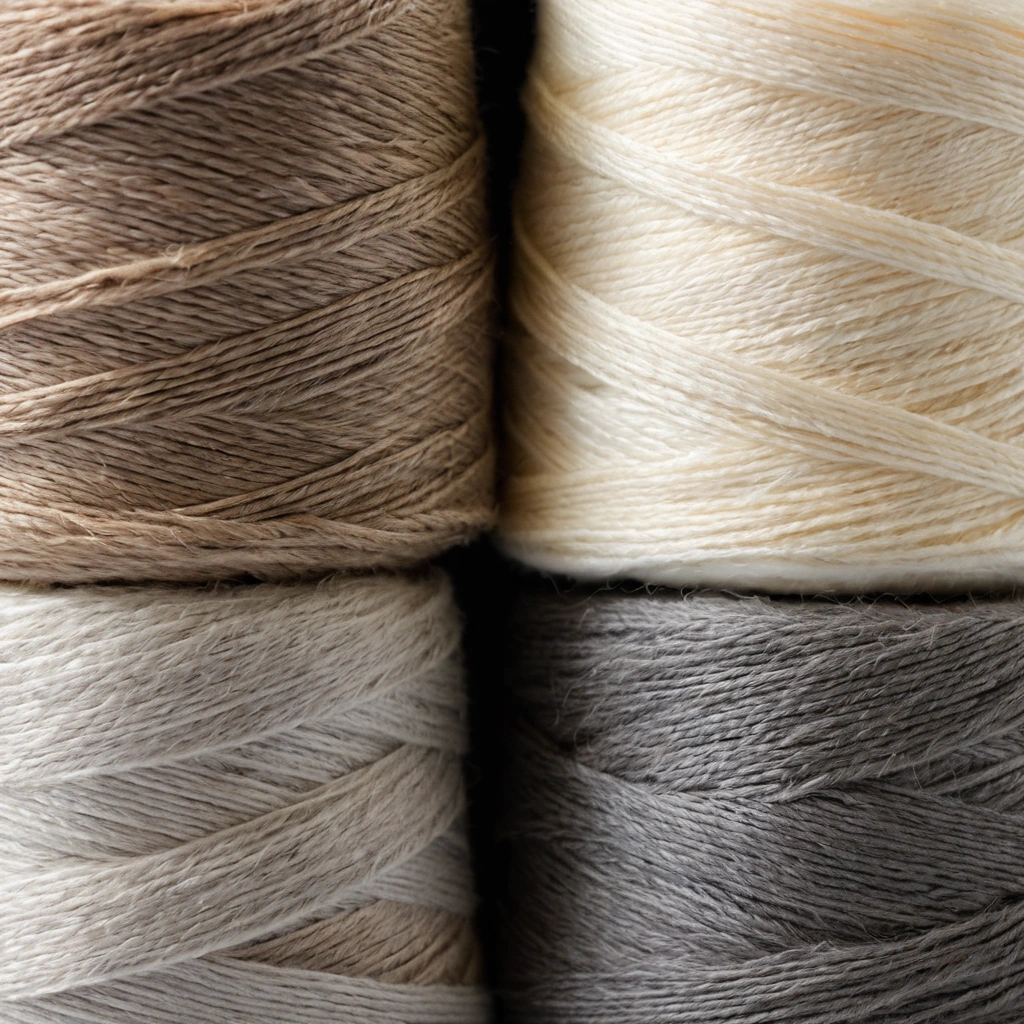
Why do cotton, linen, and wool need different questions?
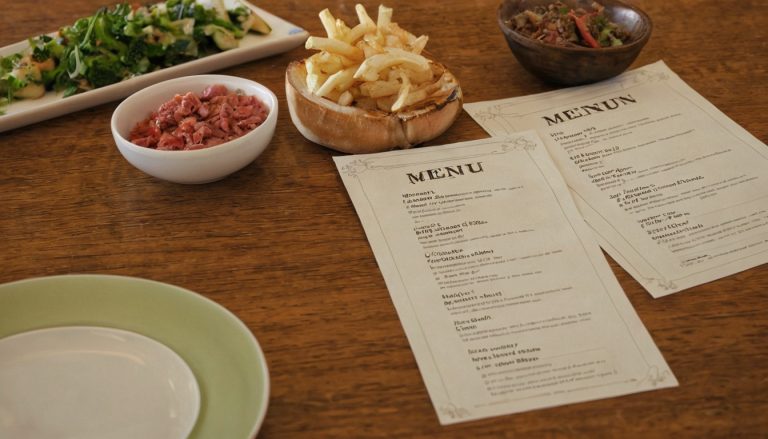
For a restaurant dining chair or banquette, compare the proposed fabric against the actual cleaning routine and the way the seat is used. Ask whether the approved cleaning products suit the finish, whether the cover can be replaced, and which test reports apply to public seating. A fiber name cannot settle those procurement questions.
For cotton, ask whether the fabric is plain woven, sateen, printed, or given a surface finish. The same cotton content can produce a crisp cover or a softer drape. For linen, ask about yarn variation, transparency, and the planned cleaning method; an irregular surface can be an intentional visual property, while uneven shrinkage in a finished curtain is a separate concern. For wool, ask about yarn construction, pile or flat weave, moth care during storage, and product-specific cleaning guidance.
The International Wool Textile Organisation’s wool care guidance discusses airing and storage, but its general material discussion does not replace the care instructions for a specific furnishing fabric. A wool upholstery blend with a special finish may have a different cleaning route from an unfinished wool throw. Never copy garment care advice onto a chair or curtain without a supplier’s instruction.
| Fiber named | Useful follow-up | Project decision |
|---|---|---|
| Cotton | What weave, finish, and colorfastness result apply? | Check surface behavior and window exposure |
| Flax or linen | What is the transparency, drape, and cleaning method? | Decide whether lining or interlining is needed |
| Wool | What construction and product care apply? | Match the fabric to seating or decorative use |
| Any blend | Which percentages describe which component? | Confirm face, backing, and trim separately |
Does “plant-based” always mean natural fiber?
No. A plant can be the source of cellulose used to manufacture a new fiber. The FTC’s bamboo textiles guidance distinguishes actual bamboo fiber from rayon or viscose made using bamboo as a feedstock. The agency says the manufactured fiber should be named as rayon or viscose, with “made from bamboo” added where appropriate. The source plant and the resulting generic fiber name are different pieces of information.
The bamboo example is useful beyond one product category. A sustainability description, a source-material claim, and a fiber declaration should each be read on their own terms. A natural-sounding marketing phrase does not establish the generic fiber in the cloth. The FTC also says sellers need substantiation for claims about retained plant properties. A designer should ask for the actual generic fiber and evidence for any extra performance assertion.
Likewise, the word “natural” does not describe dyes, finishes, adhesives, or backing. A wool pile may sit over a different foundation; a linen curtain may include a synthetic lining; a cotton upholstery cloth may carry a stain-resist treatment. None of those combinations is inherently wrong. They simply require a precise specification so the purchaser knows what will arrive and how it will be used.
How should a sample be tested against the room?
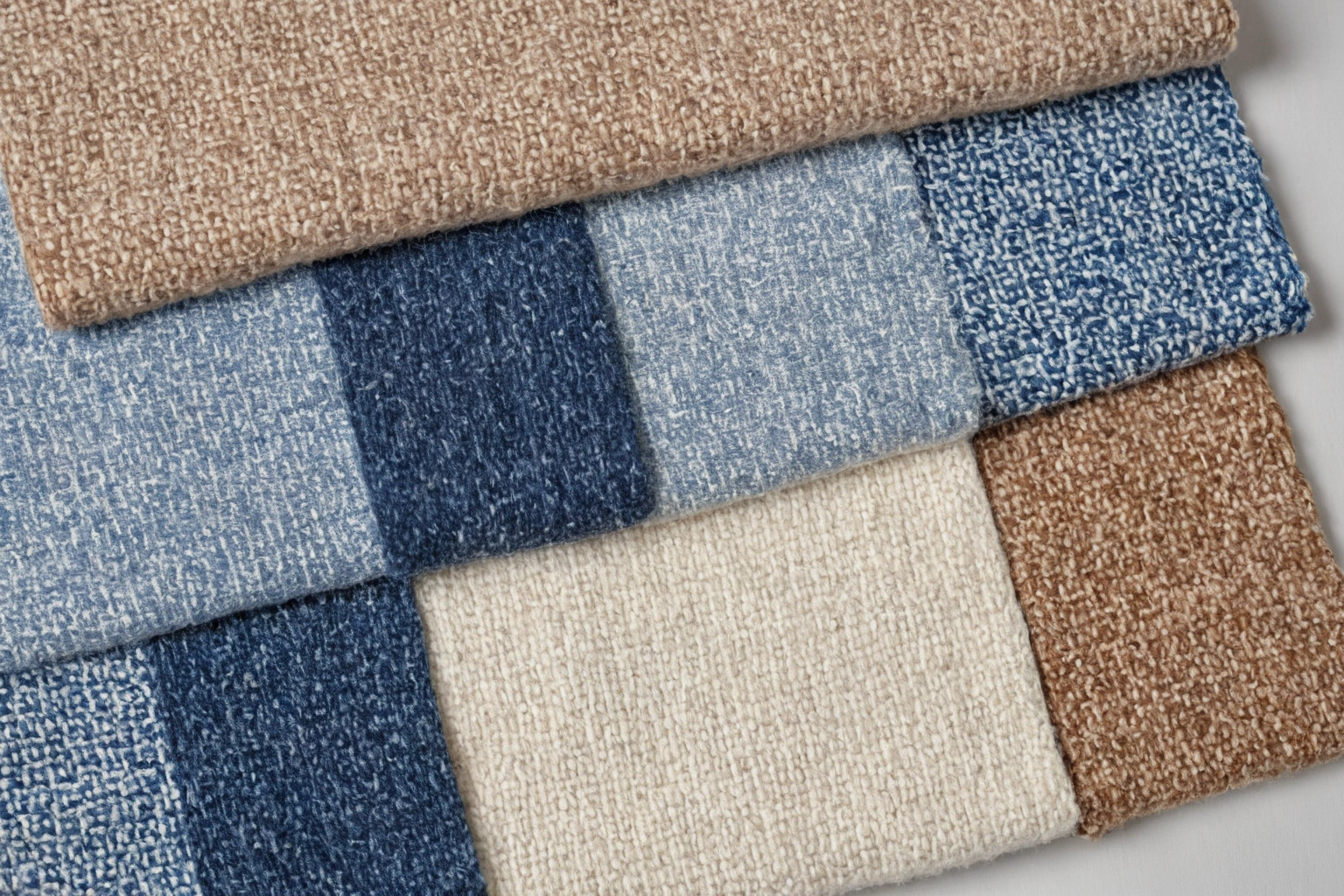
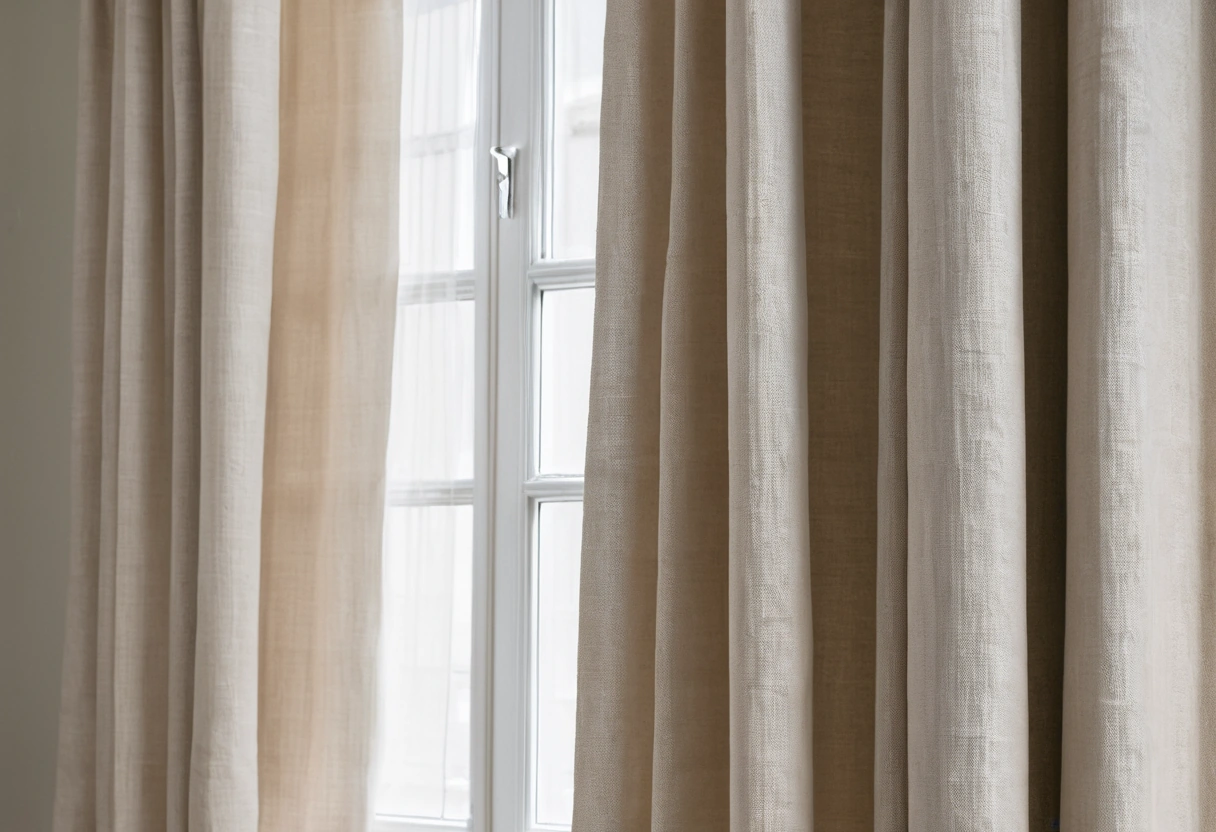
A natural-fiber swatch should be evaluated at the scale and location of its intended use. Hold curtain fabric against the window to inspect transmission and color. Drape enough length to see folds, not just a small sample card. Bend upholstery cloth around a cushion-shaped edge and observe how yarns spread. Put a rug sample on the actual floor and view the pile or weave from both directions. The room test reveals appearance; technical documents supply the evidence for durability and care.
Request a sample large enough to show the complete pattern repeat if the design has one. A printed motif viewed on a tiny clipping can seem more restrained than it will across a sofa back. Record the sample’s code, color, lot where available, and date of approval. Photograph it beside the adjacent wall finish and woodwork, but keep the physical sample: phone photographs alter color through exposure and display settings.
For upholstery, request relevant laboratory information in addition to the sample. The Association for Contract Textiles organizes contract textile performance by construction, use, and exposure. Its framework illustrates why a fiber label cannot stand in for abrasion, pilling, lightfastness, or seam behavior. Contract guidance is a selection aid, not a promise of domestic service life or a universal requirement for every natural fiber.
What belongs in a usable fabric specification?
A usable specification connects the exact product to a location and a task. Name the supplier reference, generic fiber composition, construction, finish, width, pattern repeat, color, sample approval, lining or backing, care instructions, and any performance results required by the project. Where a datum is missing, mark it as pending. A blank cell is safer than an invented claim about cleaning or durability.
- Identify whether the textile will be used for upholstery, curtains, wall covering, or a rug.
- Record the fiber composition and identify which component the declaration covers.
- Attach the relevant sample and note the light conditions in which it was approved.
- Specify construction, finish, width, repeat, and any lining or backing separately.
- Request product-specific care and performance evidence before authorizing cutting.
The specification should be updated if a sample, construction, or finish changes during procurement. A substitution with the same fiber percentage is still a different product. Ask the supplier to show that the alternative meets the same use conditions before approving it. That discipline keeps the fiber name in its proper place: a useful material fact inside a fuller design decision.
A final review should also test the consequences of care. If a curtain must be removed for specialist cleaning, document whether the household can tolerate that routine. If a heavily used seat cannot be spot-cleaned under the supplier instructions, the maintenance plan should be agreed before upholstery begins. Material choice remains a balance among appearance, practical use, and verified product information rather than a contest among fiber names.