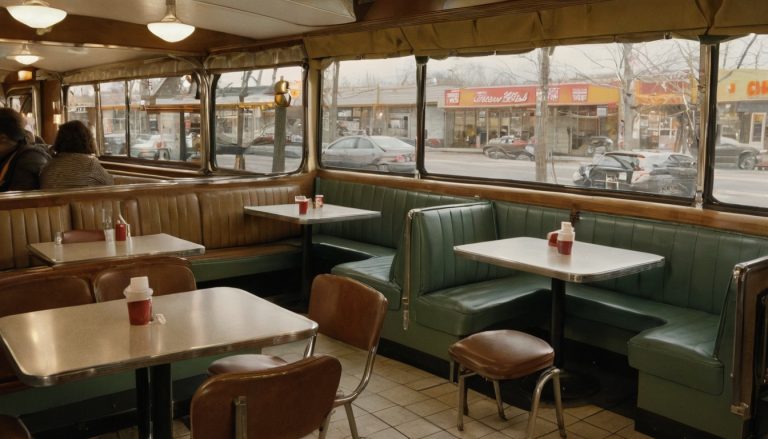
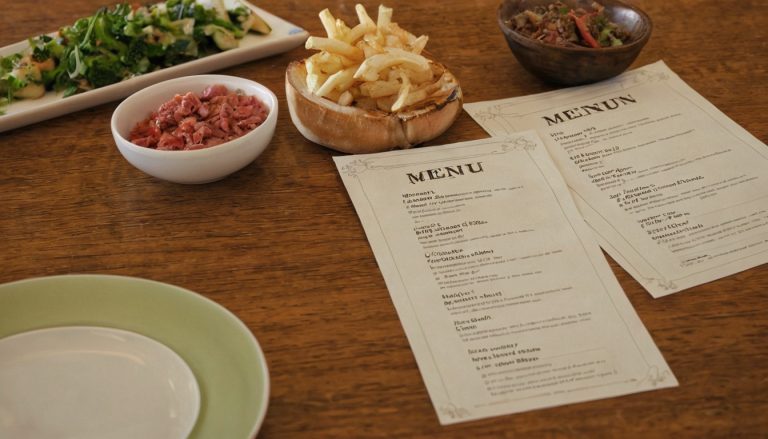
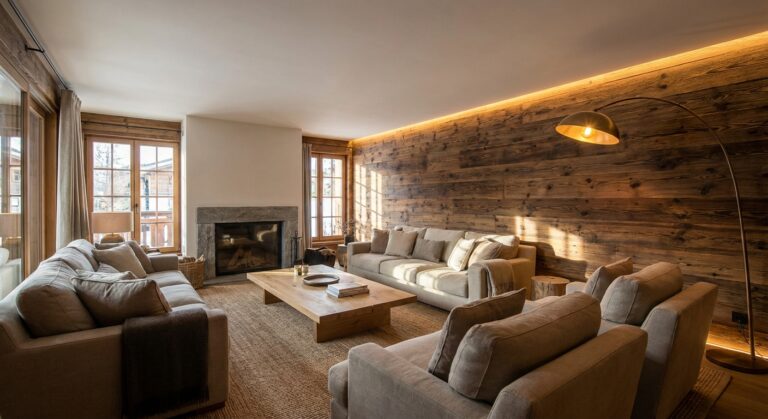
Outdoor Restaurant Seating That Works in Heat, Rain, Wind, and Peak Service
What happens when a patio adds covers but also lengthens server routes, blocks circulation, and closes whenever weather shifts? Dependable outdoor restaurant seating starts with a tested operating plan, not a furniture catalog.
How should outdoor restaurant seating be laid out before furniture is selected?
Plan outdoor seating as a service zone. The base plan must reconcile the permitted boundary, accessible circulation, emergency access, storage, party mix, and routes to the kitchen pass, bar, point of sale, water, bussing, and dish return.
| Input | Mark first | Operational consequence |
|---|---|---|
| Permit boundary | Licensed edge and property lines | Defines the usable footprint |
| Fixed obstructions | Trees, utilities, hydrants, steps, and slopes | Prevents false seat counts |
| Accessible route | Continuous approved path and dining positions | Stops chairs from blocking circulation |
| Door swings | Entrances, gates, exits, and landings | Protects egress and tray movement |
| Production points | Pass, bars, POS, water, and dish return | Reveals repeated staff travel |
| Storage | Furniture, covers, umbrellas, and barriers | Supports rapid weather shutdowns |
| Party-size mix | Expected two-tops and larger groups | Determines the modular table mix |
Which outdoor restaurant seating zones must remain fixed?
- Survey the patio, rooftop, courtyard, parking conversion, sidewalk café, or curbside platform.
- Lock the approved boundary, pedestrian route, exits, ramps, utilities, and emergency clearances.
- Trace loaded server and busser trips during peak service.
- Fit movable furniture into the serviceable area that remains.
How should outdoor tables support changing party sizes?
Select tables that combine without pushing chairs into required routes. Test chair pull-out, wheelchair positioning, joined-table stability, and resets with neighboring seats occupied. Verify the resulting layout before placing an order.
Outdoor restaurant seating must satisfy accessibility, permit, and emergency-access rules
An outdoor layout is compliant only after the operator verifies requirements for the property, seating type, jurisdiction, and current permit term.
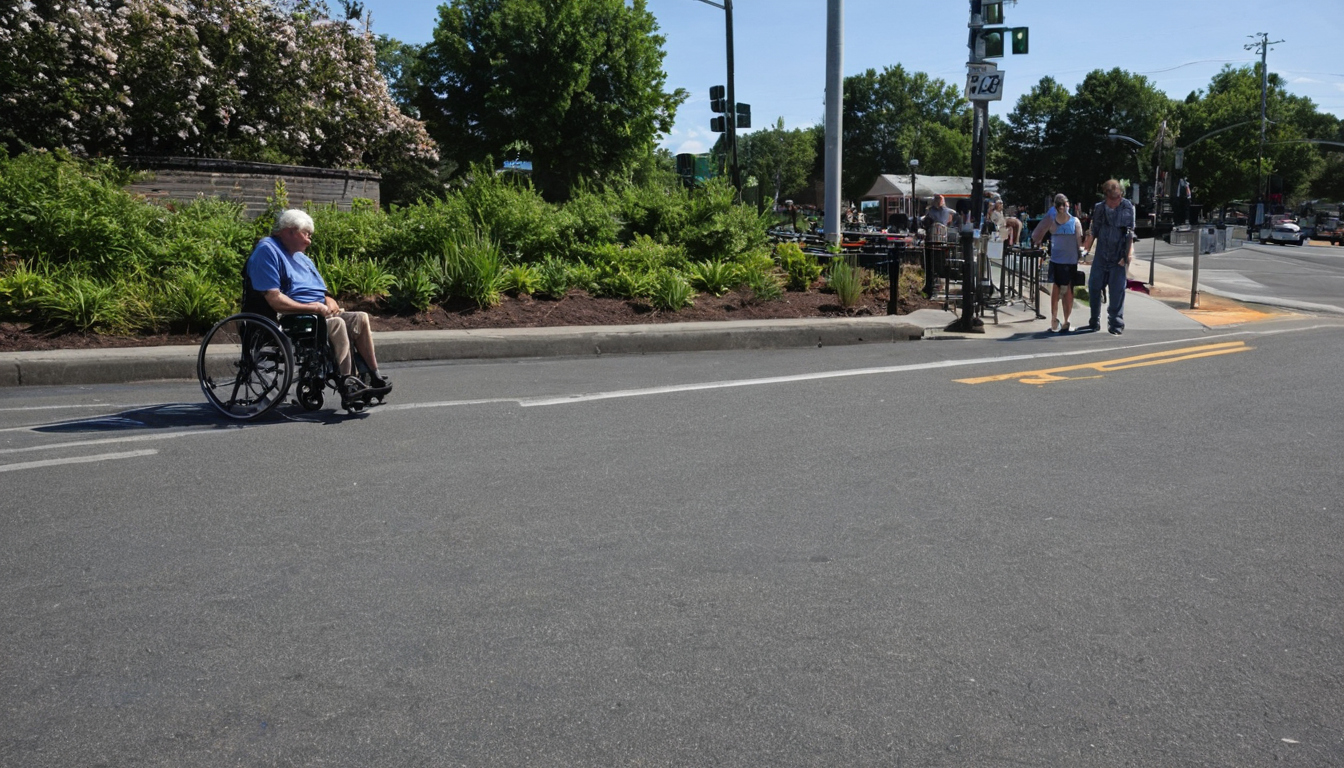
Outdoor restaurant seating must satisfy accessibility, permit, and emergency-access rules shown as a mobility planning reference.
Which accessible-route and dining-surface requirements apply outdoors?
- Review the applicable DOJ accessibility provisions for ground surfaces, level changes, protruding objects, routes, doors, ramps, and dining surfaces.
- Keep the accessible route firm, stable, and slip resistant. The ADA National Network sidewalk guidance identifies a 36-inch minimum walking-surface width. Narrowing to 32 inches is permitted only between obstacles for a distance of 24 inches or less.
- Distinguish private property from a public sidewalk. The Access Board’s PROWAG guidance concerns pedestrian facilities in public rights-of-way, while the governing review depends on the site and adopting authority.
Which local outdoor-seating rules change the layout?
- Verify pedestrian clearance, barriers, platforms, umbrellas, drainage, operating hours, insurance, and seasonal removal.
- Obtain direction from local accessibility, fire, transportation, health, electrical, alcohol, building, and permit authorities.
- Confirm emergency access, egress, heater placement, fuel storage, wiring, overhead elements, alcohol boundaries, and nightly storage duties.
Once authorities approve the footprint, weather determines which permitted seats can remain open.
How should outdoor restaurant seating respond to heat, rain, and wind?
Use conditions observed at representative tables, written manager triggers, and equipment instructions. The operating plan should specify when to relocate guests, restrict tables, secure equipment, or close the section.
| Condition | Observe | Restrict | Close or secure |
|---|---|---|---|
| Heat | Direct sun, surface heat, airflow | Exposed tables | Seats outside the venue’s comfort plan |
| Rain | Runoff, pooling, slippery routes | Wet seats and discharge areas | Unsafe circulation or persistent pooling |
| Wind | Gusts, corner acceleration, moving objects | Umbrellas and perimeter tables | Equipment reaching its manufacturer’s shutdown limit |
How can outdoor restaurant seating stay usable in hot weather?
Record seasonal shade by hour and test chair, armrest, and tabletop temperatures. Plan water service and staff breaks. Check electrical protection, overspray, maintenance, and local approval before installing fans or misters.
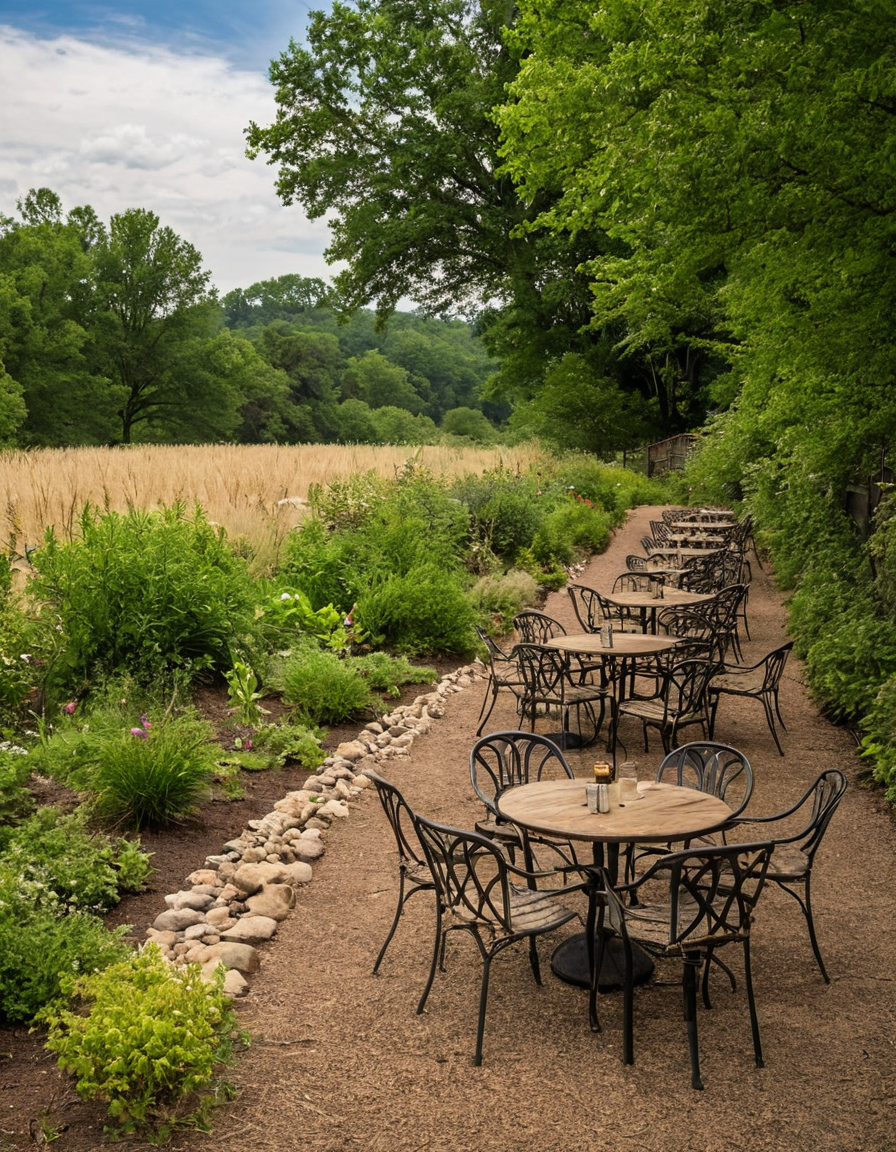
How should outdoor restaurant seating respond to heat, rain, and wind shown as a landscape planning reference.
How should outdoor seating handle rain and drainage?
Trace roof, canopy, umbrella, and platform runoff during actual or simulated rain. Store cushions dry and reopen tables only after walking surfaces and service paths are usable.
What makes outdoor restaurant furniture safer in high winds?
Furniture weight does not establish safe limits for umbrellas, screens, or canopies. Follow the manufacturer’s anchoring, ballast, shutdown, and storage instructions. Obtain professional review for fixed structures.
Which materials make outdoor restaurant seating durable and comfortable?
The right material depends on exposure, handling, and cleaning rather than a broad “weatherproof” label.
Which outdoor seating materials fit hot, coastal, or rainy sites?
- Coated steel: Inspect welds, chips, coating coverage, and hidden water traps.
- Stainless steel: Confirm the grade, fasteners, and cleaning procedure for coastal exposure.
- Aluminum: Easy to move, but lightweight frames need site-specific stability testing.
- Polymer and synthetic weave: Check ultraviolet stability, staining, sagging, drainage, and the concealed frame.
- Wood: Budget for refinishing and inspect joints after rain, intense sun, or freezing conditions.
- Upholstery: Favor removable, fast-draining components with documented cleaning guidance.
- Composite tops: Check surface heat, edge swelling, scratching, and outdoor-use warranty exclusions.
How should operators test outdoor chairs before ordering?
Place samples in representative sun and rain. Test wobble, comfort, arm clearance, glides, fasteners, stacking, lifting, water retention, cleaning, and emergency removal. Guidance on testing commercial chairs for cleaning, turnover, and long guest sits provides a useful indoor baseline, but outdoor samples also need exposure and storage tests.
How can outdoor restaurant seating remain efficient during peak service?
Outdoor seats add dependable capacity only when staff can serve them at peak demand. Time trips from each zone to the pass, bar, POS, water, bussing point, and dish return.
Where should an outdoor service station be placed?
Place a permitted support station near the busiest tables without narrowing an accessible route or interfering with ramps, gates, exits, and door swings. Confirm weatherproofing, sanitation, electrical, pest-control, security, and removal requirements.
How should outdoor seating bars handle beverage traffic?
Outdoor seating bars need separate paths for drink delivery and glass return. Keep guest queues away from the service well and accessible route, and verify alcohol boundaries, broken-glass procedures, and staff sightlines.
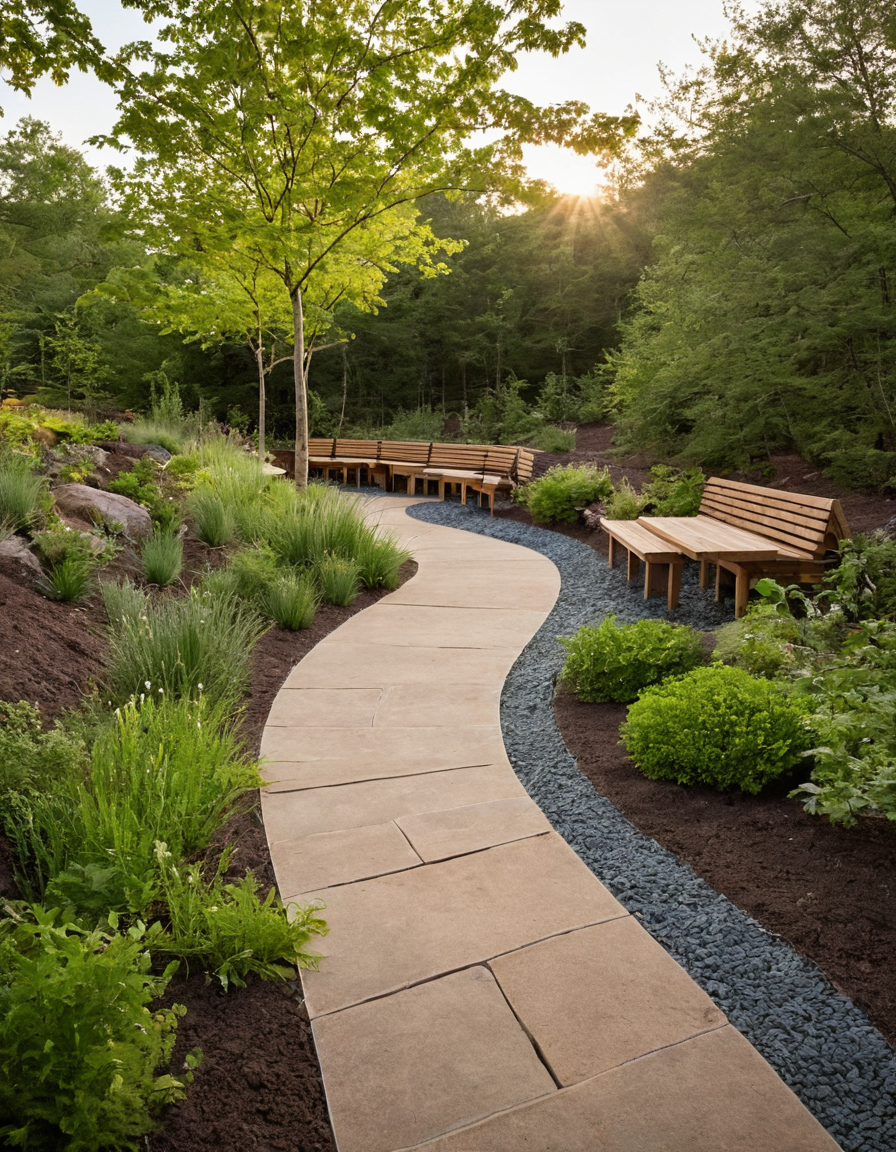
How can outdoor restaurant seating remain efficient during peak service shown as a landscape planning reference.
Outdoor restaurant seating should be piloted before a full purchase
Test a marked layout during representative weather and peak service before purchasing a complete package. Obtain temporary-layout approval where required.
What should an outdoor seating pilot measure?
- Record route clearance, server travel, table-combination time, resets, cleaning, and storage movement.
- Ask guests about shade, glare, heat, wind, noise, stability, privacy, and comfort.
- Collect observations from hosts, servers, bartenders, bussers, cleaners, and managers.
- Compare purchase price with permits, anchoring, shade, covers, maintenance, storage, and replacement parts.
When should an outdoor seating section be restricted or closed?
A named manager should monitor manufacturer instructions, official weather guidance, pooling water, hot surfaces, poor air quality, lightning, wind, equipment faults, and staffing. The same manager should control guest relocation, furniture securing, incident records, and reopening inspections.

Outdoor restaurant seating should be piloted before a full purchase shown as a landscape planning reference.
Buy only the seating package that passes live service and has written open, restrict, and close triggers.
Frequently asked questions
What is the best outdoor furniture for a restaurant in a high-wind area?
Choose stable commercial furniture tested at the site, but do not treat chair or table weight as protection for umbrellas and screens. Follow each equipment manufacturer’s anchoring and shutdown instructions.
Which patio furniture materials stay most comfortable in hot weather?
Light-colored polymers, synthetic weaves, wood, and ventilated designs may retain less noticeable heat than dark solid surfaces. Test actual samples in direct sun before ordering.
What is outside seating at a restaurant called on permits and plans?
Terms vary by jurisdiction and may include patio, sidewalk café, parklet, outdoor dining area, rooftop terrace, or curbside dining platform. Use the local authority’s permit category.
What is the lowest-cost way to create outdoor restaurant seating without sacrificing safety or accessibility?
Start with a marked, approved layout and a small modular furniture pilot. Avoid permanent structures until circulation, weather response, storage, and service flow have been tested.
When should a restaurant restrict or close outdoor seating because of weather?
Restrict or close seating when written operating triggers, official guidance, unsafe surfaces, equipment instructions, or site conditions require action. Do not rely on a universal wind or temperature threshold.